

How To Find Agates On The Beach
Some people look out at the body of water, and some people look down at the rocks. I realized I was the stone blazon after moving to a small-scale town on Oregon'due south South Coast and taking endlessly long beach walks that concluded with my pockets pounds heavier. Scanning the gravelly sand for treasures fulfilled a deep craving I didn't even realize I had. Function thrift shopping, part meditation, hunting for embankment finds somehow gave rest to troubled thoughts and allow time autumn away.
I'k not the but person who feels this way.
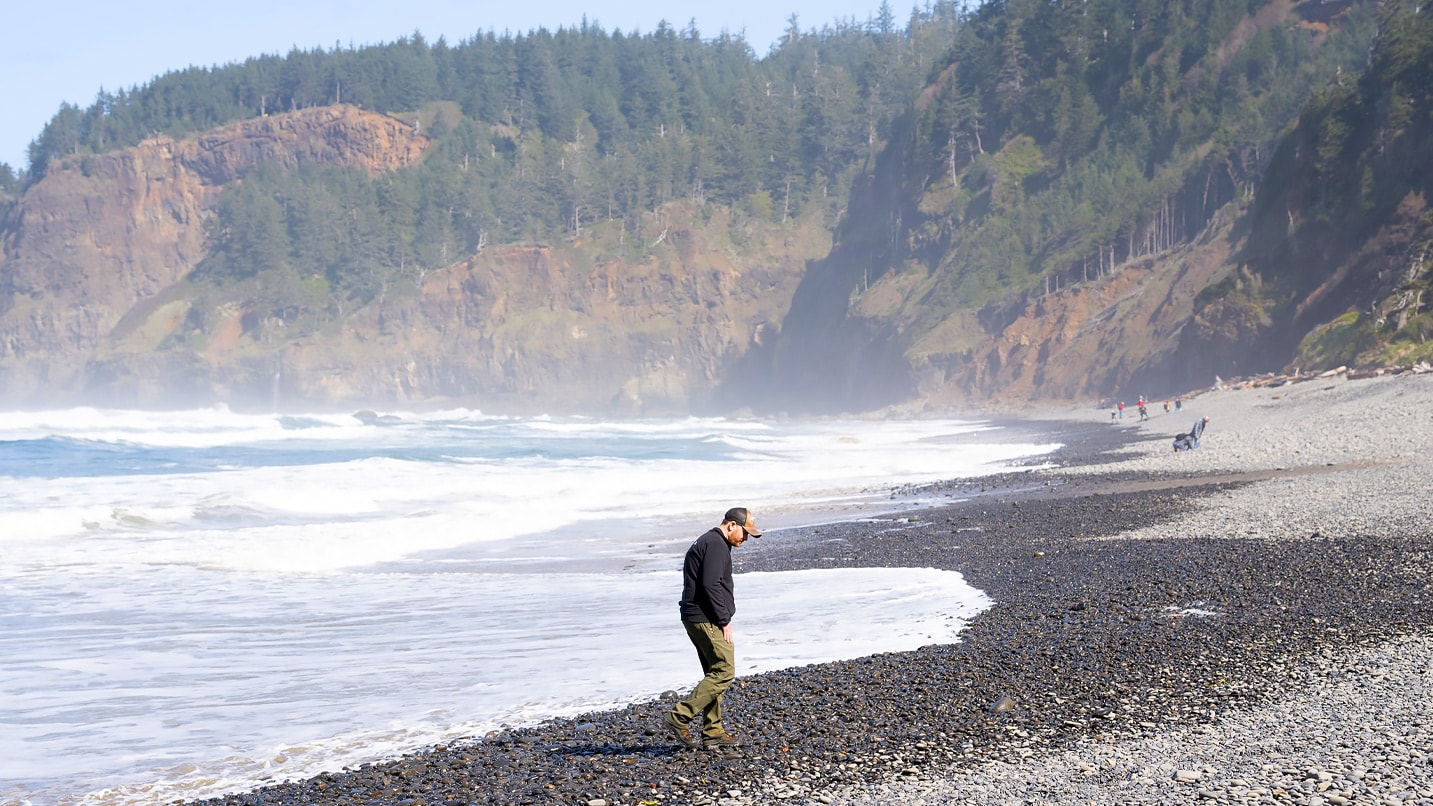
The rocks call to Eric Davis. A self-taught agate hunter based on the Oregon Declension, he often walks on the beaches at Oceanside, eyes on the footing in front of him, looking for a niggling glint of light or something half-buried in the sand. He studies the cliffs, searching for recent landslides, and inspects jagged chunks of stone that are streaked with waxy green jasper or even telltale nodules of whitish clear material — literally the female parent lode — of agates.
"The excitement in exploration is about therapeutic," he says. "And better even so, almost anyone can do it."
What Are Agates?
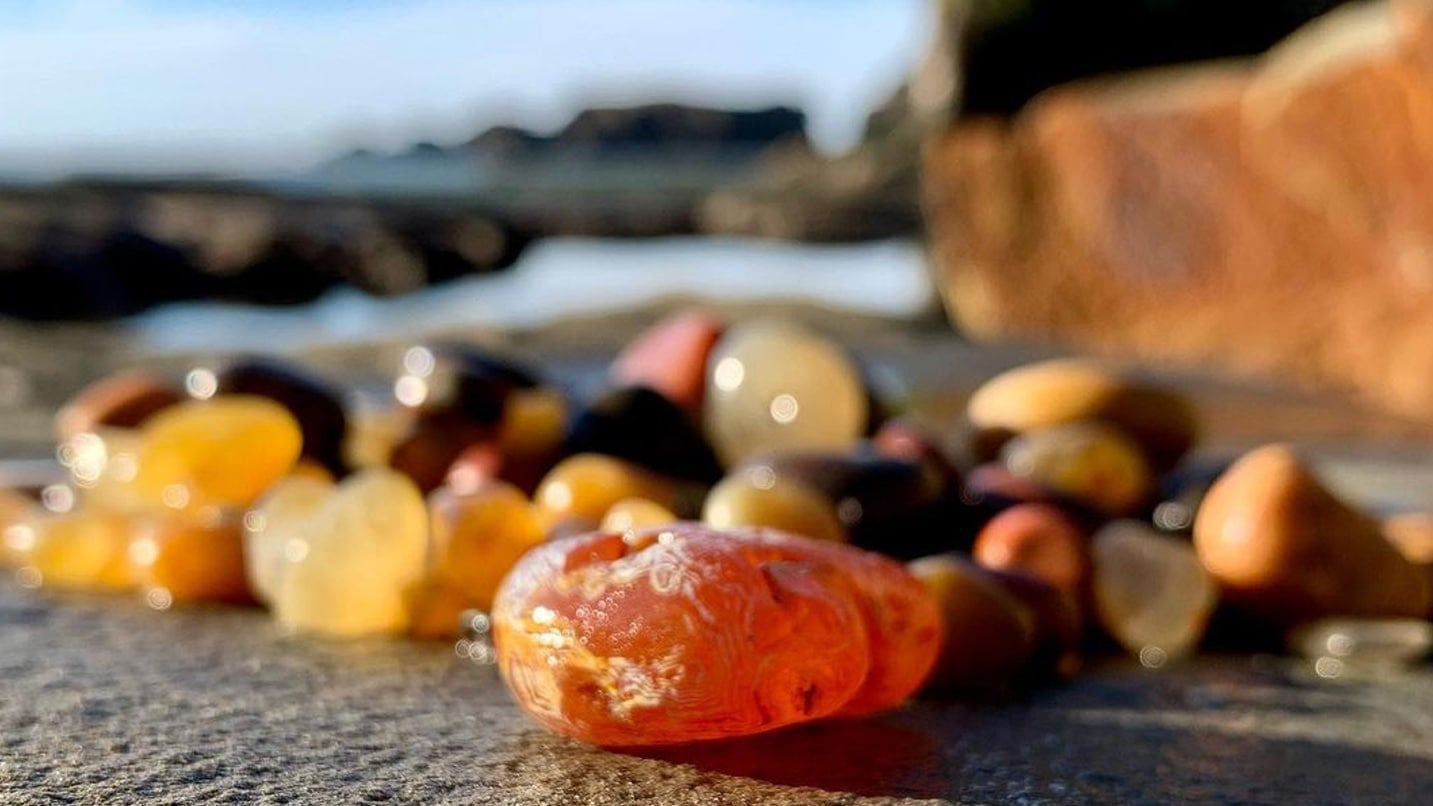
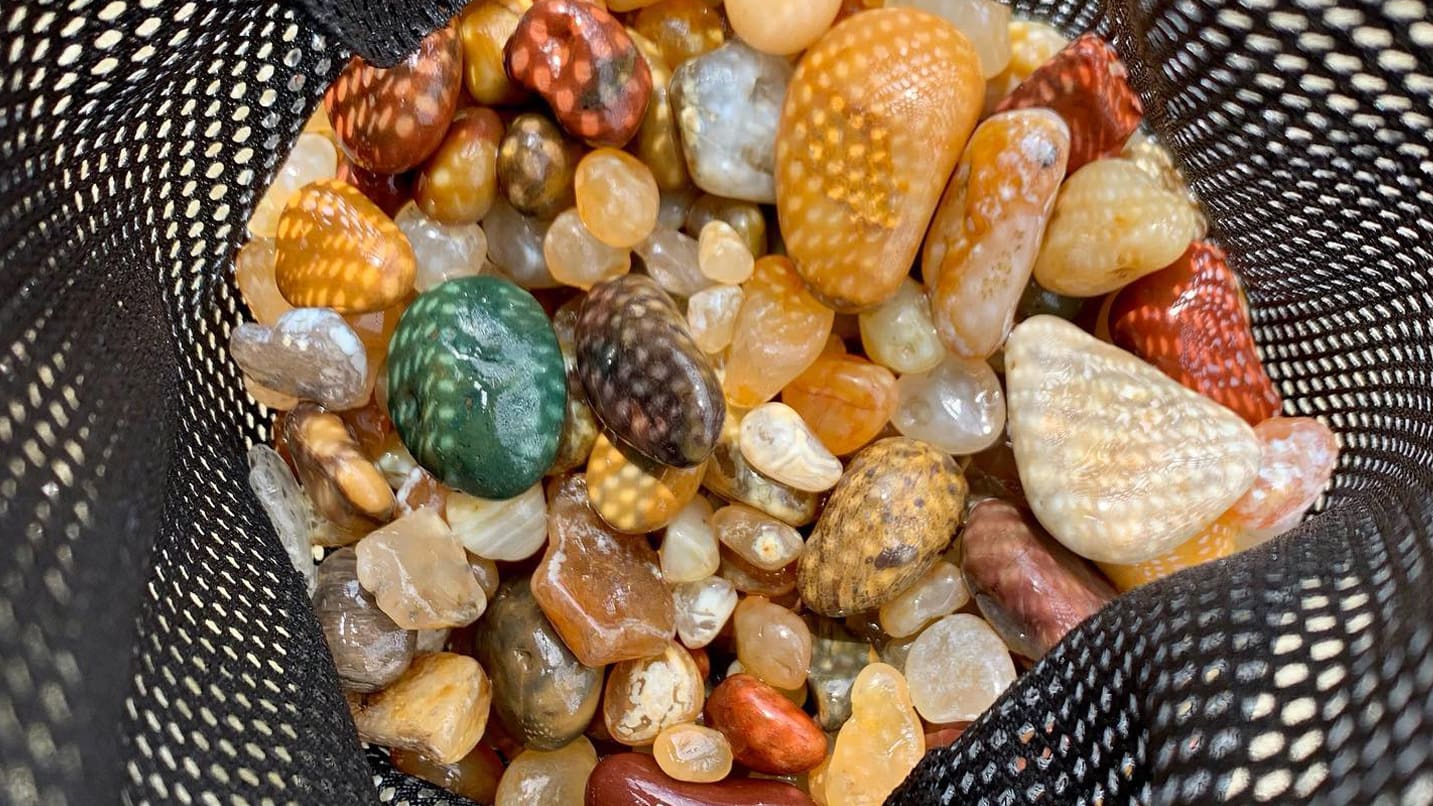
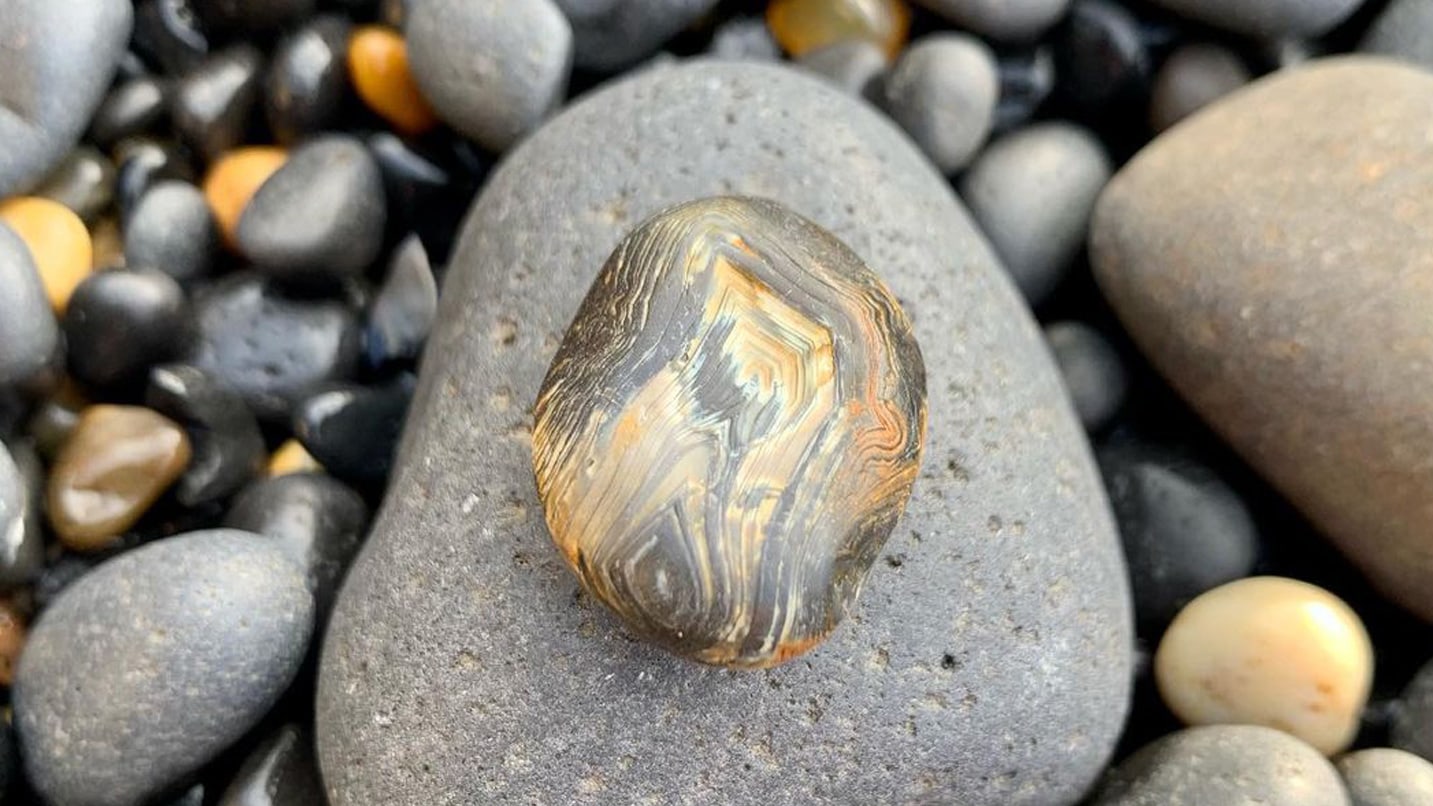
Yous can tell an agate from other beach rocks by its translucence. Hold it upwards to a light and yous'll be able to run into it glow. When you lot see an agate in wet gravel, it will exist the 1 that looks like it'south lit from within. Agates come up in a range of colors from clear to dark blue but are frequently shades of yellow or even deep red.
They were formed millions of years ago in volcanic rock — like the basalt cliffs of the Oregon Coast Range. Southward ediment in the cavities underwent changes under massive pressure and scorching oestrus, creating chalcedony quartz. When the chalcedony has bands or mineral inclusions in the stones, they're known as agates. As the waves batter the cliffs, chunks of material fall off, and the agates hosted within are weathered down into cobble and smoothed in waves or rushing rivers for longer than we can conceive.
That's what Elizabeth Markham, owner of Billow Cloud Soaps in Yachats, loves about them. She frequents the beaches nigh her shop to fodder for coastal ingredients for her handmade seawater soaps. She's inspired by the swirls and concentric patterns in the agates she finds on her walks, incorporating the designs or even decorative bits of stone in her soap pours as she wonders about their origin and the vastness of time.
"What kind of chaos and circumstances created each one? How long did they tumble in the ocean earlier I establish them?" she wonders. "The closer y'all expect at them, the more beauty yous find."
Top Places to Hunt
You can find these beauties at any time of the twelvemonth and at many beaches on the Oregon Coast. Some contend the best time to find them is when the beaches are scoured past the current of air in winter, the loss of sand revealing layers of rocks any fourth dimension from December to March, but a peaceful kayak paddle may allow many hours of exploring the fantabulous gravel bars in coastal rivers from August through early October. Summer's highest tides can expose unexplored gravel, as well.
Agates are likely to announced in beaches backed past cliff faces, and they show upward anywhere from high on the beach to the low-tide zone. Closest to the water, where you can come across wet rocks well, is a natural place to start, just be very careful here, because it'southward very easy to get lost in the search and fail to see an incoming sneaker moving ridge. Mid-beach, which is safer, ofttimes reveals the best of the gravel but is more than picked over by other hunters. I've found some of my best agates on the upper beach, where fewer people hunt.
How to Find the Inside Scoop
Making friends with other local rockhounders is probably the best way to larn where the best agates are. Many are happy to share when a spot is producing well — later they've picked their fill up that mean solar day, of course.
Davis loves the communal nature of rockhounding, and walking with him on the beach, I can see that the customs loves him back. A woman shows him a handful of rocks and wants his opinion. Another couple, walking from a secluded section of the embankment, shares some beautiful finds and tips united states of america off on some surf scoters floating in the waves nearby. "Often people are really friendly," says Davis. "I get asked questions all the fourth dimension, and frequently I'll larn something from an old-timer who'south been doing this his whole life."
In render, Davis posts videos and photographs of some of the spectacular agates he collects. "I see it as being an ambassador for the Coast," he says.
Supplies That Can Help
A nice attribute of agate hunting is that it's free, and anyone with an ounce of patience who can pick upwards small rocks tin practice it with no tools at all.
Some simple supplies can assist, though. You'll want to wear sturdy, waterproof shoes or hiking sandals, as rocks are sharp and you can cut yourself on occasional metallic droppings in the sand. A heavy-duty mesh-internet purse that can hold a quart or so makes information technology piece of cake to launder sand from the stones. A walking staff with a curved cease can be used to turn over pebbles and helps greatly when you're navigating slick rocks. Some people utilize a long-handled scoop to save their backs from clothing and tear. Keep in heed it'southward illegal to chip or pry agates out of cliffs.
Another strategy is only to take a seat. "Sit down and take in all the little bits effectually you," says Markham, who recently found a tiny, prehistoric agatized trounce that mode. "It'due south and then like shooting fish in a barrel to think bigger is amend, but it's totally not."
Where to Go
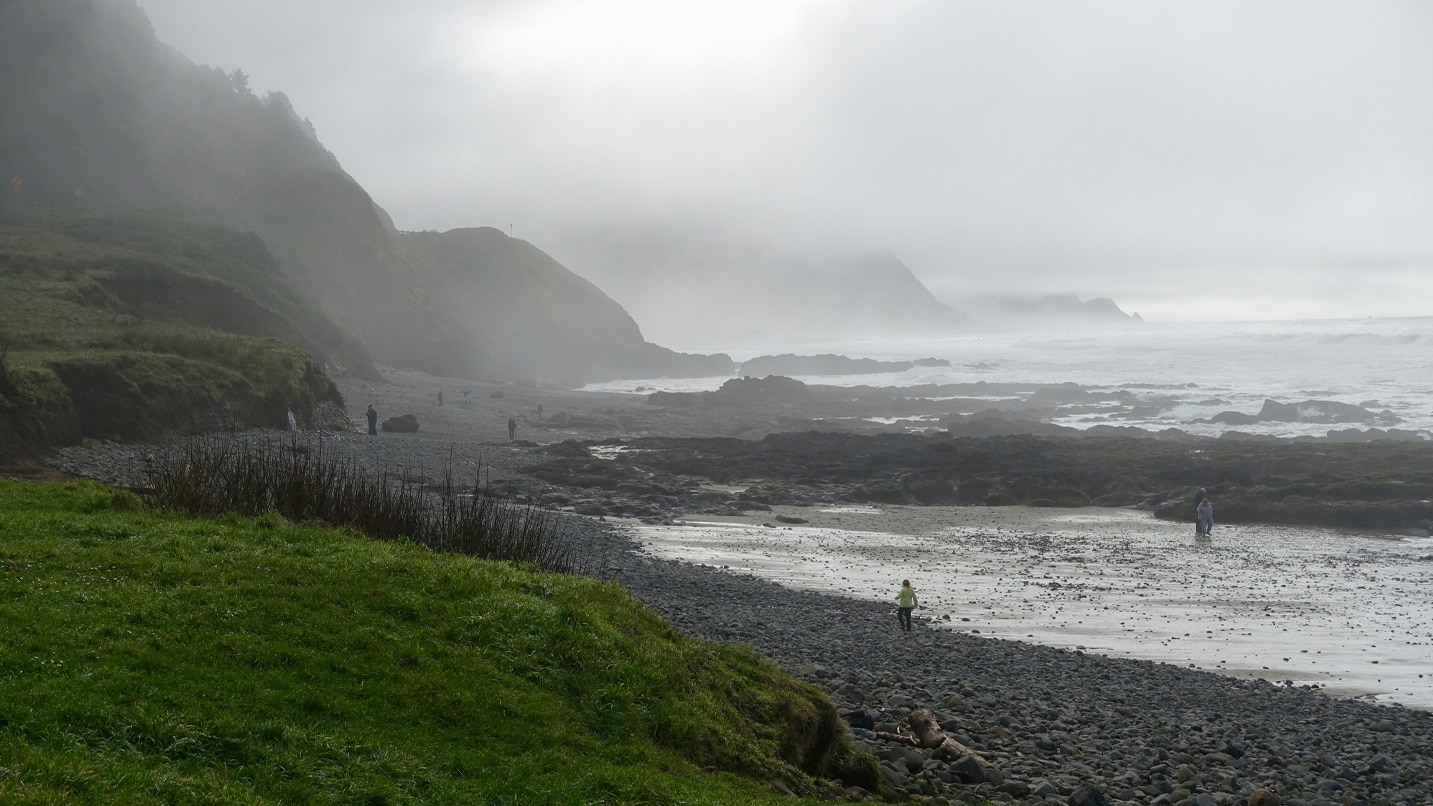
The busy North Coast may have competitive hunting, so try to find the quieter areas. Head for Cape Meares , with rocky headlands that hope cobbles on the embankment. At Oceanside Beach Country Recreation Site , you can explore all the way down to Netarts or head through the tunnel on the due north side to Tunnel Beach at low tide. For river hunting, seek out public areas of the Nehalem River , where you lot might find fe-rich carnelian agates.
On the Primal Coast, endeavour Fogarty Creek State Recreation Area , north of Depoe Bay. It tends to remain rocky when other beaches have their gravel beds covered in sand in summer. Newport has miles of beach south of the South Jetty to explore, and good parking options besides. Look for big specimens and "Newport Blues," a dark-grayness or blackish stone, at South Beach State Park and surrounds. The Yachats area — including four pull-offs that comprise Neptune Country Scenic Viewpoint — is often filled with happy agate hunters.
Southward Declension visitors tin head out to many fine beaches betwixt Bandon and Charleston, including Whiskey Run Embankment (be sure to check both beach and creek). The area around Aureate Beach yields some prized finds on a good day. Park at Otter Point Land Recreation Site and explore miles of beaches north of the Rogue River. And the lower Rogue River itself can be marvelous for large agates on the gravel bars alongside and in the river.
Places to Find Agates if You lot're Not on the Beach
Proceed your eyes peeled in coastal antiques shops: You lot'll often find jars of agates or art busy with the stones. Rice Museum of Rocks & Minerals in Hillsboro, the Baker Heritage Museum in Bakery City and the 12,000-square-human foot Crater Stone Museum in Key Signal all take extraordinary galleries of rocks and minerals found in the Pacific Northwest, including agates and thundereggs, the Oregon state rock (which can be filled with agates, jasper and opals). Experts are bachelor at many rock, gem and mineral shops beyond the state, and some even provide identification advice at the annual Yachats Agate Festival during the third weekend in Jan. The Yachats Customs Presbyterian Church building — known as the "agate church" — has a wall of six large windows created past the community out of fiberglass, epoxy and 15 gallons of agates. Yous tin can visit without an date Mondays through Thursday mornings, or appreciate the lite streaming through during services.
If You lot Get:
- Know the regulations of the surface area you're searching. No more than than ane gallon of rocks per twenty-four hours and 3 gallons per year is the rule for collecting agates for personal use on Oregon's public beaches, only if you are at a protected marine site, y'all may non be allowed to collect anything.
- It's illegal to pry or chip any rocks from the cliffs and can destabilize hillsides; go along your hunting to loose rocks on the ground.
- Check the tides before yous go, and continue mindful of the incoming tide while you're on the beach. NOAA provides updated marine weather and slap-up forecasts .
- Never turn your dorsum to the sea, watch for sneaker waves , and avoid logs and modest coves or caves that don't provide quick escapes to higher ground.
Source: https://traveloregon.com/things-to-do/trip-ideas/favorite-trips/how-to-hunt-for-agates-on-the-oregon-coast/
0 Response to "How To Find Agates On The Beach"
Post a Comment